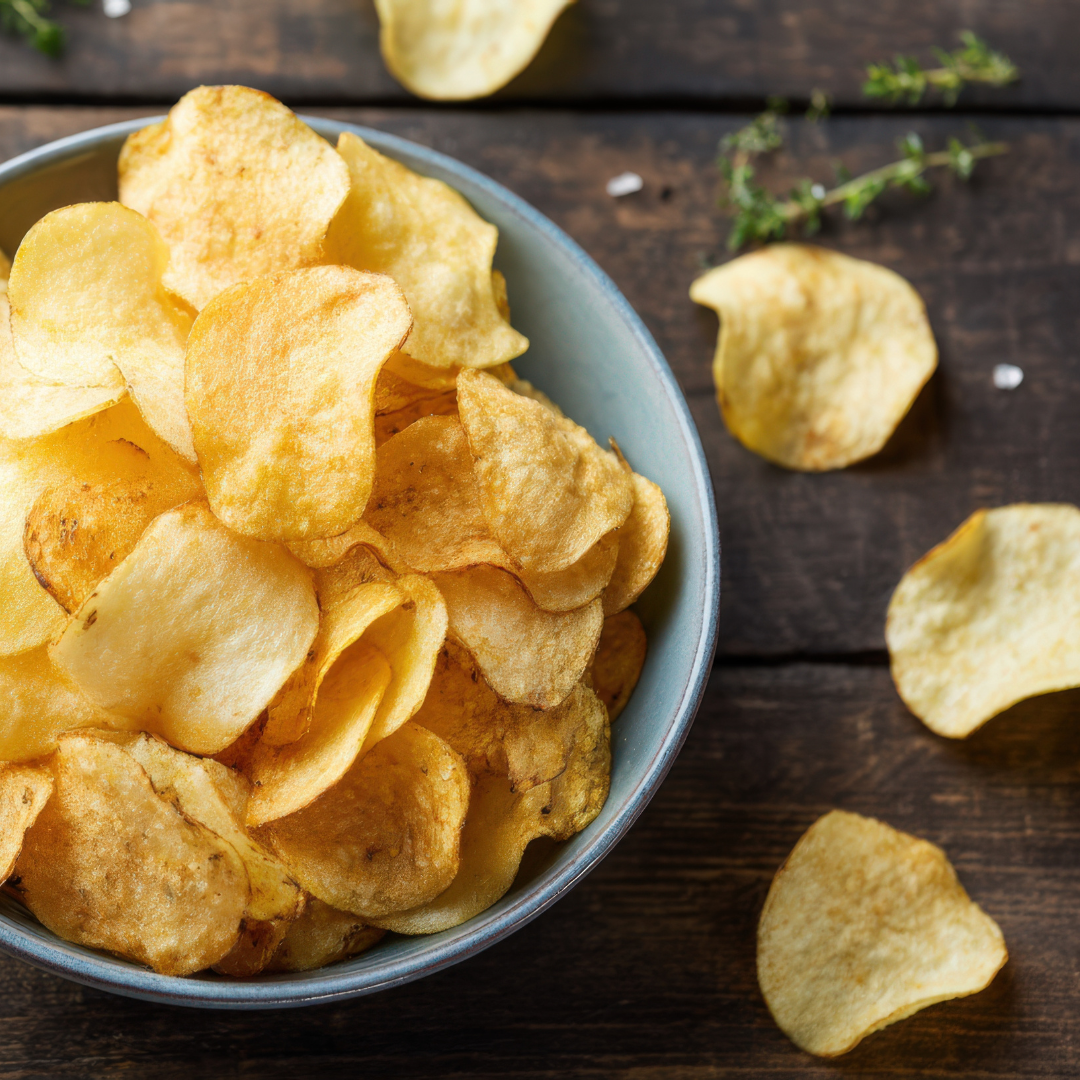
This one is all about technique. Chef Brendan, Executive Chef of Golden Steer New York, takes something as familiar as a potato chip and applies a few steakhouse rules to make it considerably better: choose the right potato, remove the starch at every opportunity, fry low and slow, and season while the chips are still hot.
The flavor comes from French Cuffs Seasoning — but not quite as you know it. Chef Brendan grinds French Cuffs into a fine dust, concentrating its savory, onion-forward flavor, then pairs it with malt vinegar powder. The combination reminded him of the best parts of French onion and classic salt-and-vinegar chips: rich, tangy, salty, and just familiar enough.
At Golden Steer New York, French Cuffs Chips are served with French onion dip during Golden Hour. Make the chips Chef Brendan’s way, add a bowl of your favorite onion dip, and you’ll understand why.
Makes 4–6 servings
Here’s what you’ll need:
Ingredients
For the French Cuffs Malt Vinegar Dust
- 2 tbsp French Cuffs Seasoning
- 1 tsp malt vinegar powder, plus more to taste
For the Potato Chips
- 2 large Idaho russet potatoes
- Room-temperature water, as needed
- Boiling water, as needed
- Neutral frying oil
- French Cuffs Malt Vinegar Dust, to taste
For Serving
- French onion dip (optional, but highly recommended)
Directions
Make the French Cuffs Malt Vinegar Dust
- Add French Cuffs Seasoning to a high-speed blender, such as a Vitamix, and blend until it becomes a very fine powder. Chef Brendan is particular about this step: a food processor doesn’t create enough velocity to get the seasoning to the dust-like consistency you want.
- Combine the ground French Cuffs with the malt vinegar powder. Start with 1 tsp, taste, and adjust depending on how tangy you like your chips. Set the seasoning beside your fryer before you start cooking — once the chips come out, you’ll need to move quickly.
Prep the Potatoes
- Peel the potatoes and immediately place them in a bowl of room-temperature water. This keeps them from browning while you work.
- Fill a second bowl with fresh room-temperature water. Using a mandoline, slice the potatoes directly into the water. You’re looking for a true potato-chip slice: thin enough to crisp, but not so thin it becomes transparent.
- As you slice, use your hands to gently separate the potato slices in the water. Freshly cut potatoes release starch that acts almost like glue — separating them now keeps the slices from sticking together later.
Chef Brendan’s Starch Trick
- Bring enough fresh water to completely cover the sliced potatoes to a boil.
- Drain the potatoes from their room-temperature water and transfer them to a clean, heat-safe container.
- Pour the boiling water directly over the potato slices and gently stir to release even more starch. Let them sit for about 5 minutes, then drain thoroughly.
The repeated rinsing might seem excessive, but it’s the backbone of Chef Brendan’s method. Removing starch at every stage helps the potato crisp before it browns. Leave too much starch behind and your chips can turn dark long before they develop the texture you want.
Fry Low and Slow
- Heat your fryer or a deep pot of neutral oil to 300°F.
- Working in small batches, carefully add the potatoes one at a time. Chef Brendan’s preferred move is almost like dealing cards: gently “frisbee” each slice into the oil rather than dropping a handful in at once. If they enter the fryer stuck together, they’ll stay that way.
- Use a heat-safe spoon or spider to gently agitate the oil and keep the slices separated as they cook.
- Fry slowly until the chips are crisp and lightly golden. Watch the bubbles as much as you watch the clock — as long as they’re vigorously bubbling, moisture is still escaping. When the bubbling and sizzling nearly stops, most of that moisture has been removed and the chips should be crisp.
- Avoid overcrowding the fryer. Adding too many potatoes at once drops the oil temperature and prevents the chips from developing the right consistency. Small batches are worth it.
Season Immediately
- Lift the finished chips from the oil and give them a quick shake, but don’t drain them until they’re completely dry.
- Transfer immediately to a large bowl while a small amount of oil still clings to the surface. Sprinkle generously with the French Cuffs Malt Vinegar Dust and toss quickly. That timing matters — the residual oil is what grabs the seasoning and keeps all that French Cuffs flavor on the chip instead of at the bottom of the bowl.
- Repeat with remaining potatoes, seasoning each batch immediately after frying.
Serve It Like Chef Brendan
- Pile the chips high and serve while fresh. At Golden Steer New York, French Cuffs Chips make an appearance during Golden Hour alongside French onion dip — a pairing that makes even more sense once you taste Chef Brendan's seasoning. The ground French Cuffs brings an intensely savory, almost French-onion quality. Malt vinegar brings the acid. The potato brings the crunch. Add a cold French onion dip on the side and you have the kind of bar snack that rarely survives long enough for a second round.
- Enjoy!
Why French Cuffs Works
When Chef Brendan first ground French Cuffs into a powder, the flavor clicked immediately: concentrated, savory, and reminiscent of French onion soup seasoning. Instead of fighting that flavor, he leaned into it. Malt vinegar powder brings the sharpness you expect from a classic salt-and-vinegar chip, while French Cuffs brings the salt, aromatics, and deep savory character. Grinding the seasoning into a dust also serves a practical purpose — the finer texture coats the potato more evenly while the chips are still glistening from the fryer. It’s a good reminder that sometimes the chef move isn’t adding more ingredients. It’s figuring out how to get more out of the ones you already have.